
Highlights vs Lowlights: How to Choose the Right Dimension for Your Hair
Are you trying to decide between highlights and lowlights for your next hair color? This guide explains the differences, benefits, and how to choose the right technique for your hair type, color goals, and lifestyle. Whether you want a subtle change or a dramatic transformation, you'll find everything you need to make an informed decision.
Key Takeaways
Highlights lighten select strands while lowlights deepen them, and combining both often gives the most natural, expensive-looking color. When done right, this blend creates movement, dimension, and that “I woke up like this” vibe that never goes out of style.
Highlights typically fall 2–4 shades lighter than your base color, while lowlights sit 1–3 shades darker. Both techniques can be tailored for blonde, brunette, and red hair, making them versatile options for almost anyone looking to refresh their look.
Keep in mind that highlights require more frequent maintenance than lowlights, especially on darker natural hair or when going very bright. Lowlights blend with regrowth more softly, making them a smart choice if you prefer less time in the salon chair.
Professional application at Clementine’s Salon locations in Denver LoHi, Arvada, and Aurora protects hair health while achieving modern, soft dimension. Our stylists use bond builders and professional-grade color to keep your locks strong and shiny.
Ready to find your ideal mix of highlights and lowlights? Book a color consultation at Clementine’s to get started.
Highlights vs Lowlights: The Basics
If you have ever scrolled through hair inspiration photos and wondered what separates a sun-kissed blonde from a rich, velvety brunette, the answer often comes down to one thing: how a stylist uses light and shadow. Highlights and lowlights are the two main tools that create that depth you see in gorgeous, dimensional hair colour. Understanding the difference between highlights and lowlights helps you walk into your next appointment knowing exactly what to ask for.
The primary difference between highlights and lowlights is in light and dark colors.
Highlights are lighter pieces woven through the hair to add brightness, while lowlights are deeper pieces added back in for richness and contrast. Think of highlights as the sparkle and lowlights as the shadow—together, they create texture and movement that a flat, full color simply cannot achieve.
Unlike a single-process color that changes every strand to one uniform shade, highlights and lowlights only touch selective strands. This approach keeps your natural colour peeking through, which is why the result looks more organic. At Clementine’s Salon, our stylists often recommend a custom blend of both for that “lived-in” look that grows out softly and looks effortless between appointments.
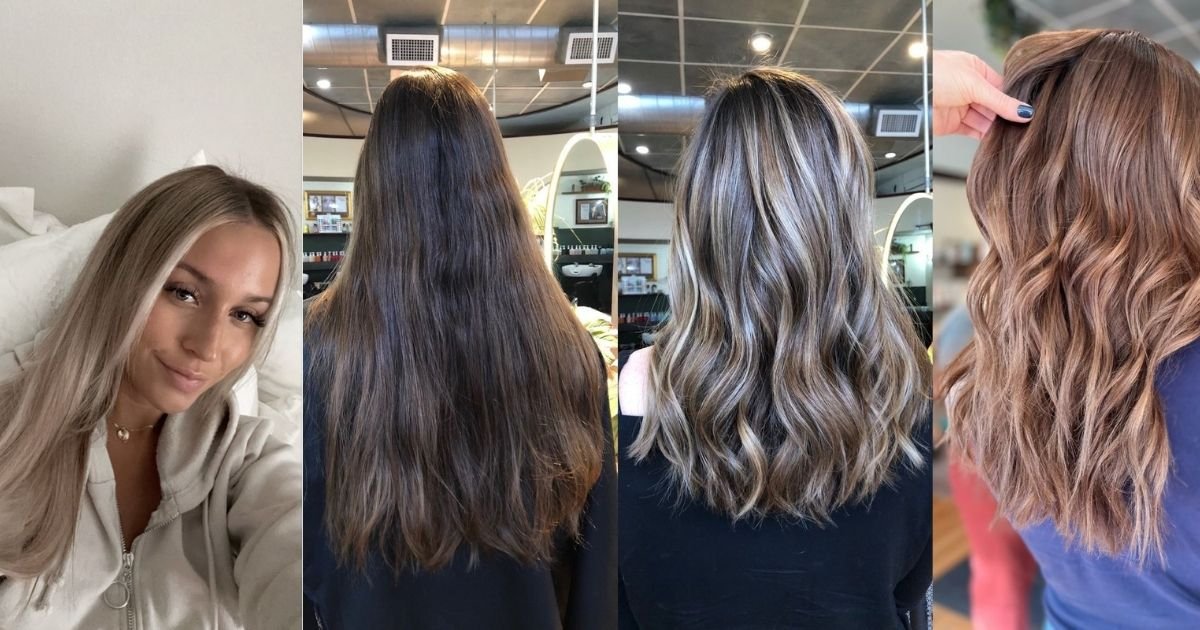
Women standing in natural sunlight, showcasing their dimensional hair color with striking highlights and lowlights that add depth and brightness to their fine locks. The lighter shades beautifully contrast with her darker base color, enhancing her overall look and complementing her skin tone.
What Are Highlights?
Highlights are sections of hair that are dyed or bleached to be lighter than your natural hair color.
Highlights involve lightening sections of hair to 2–4 levels above your natural shade or current base color. This lift is achieved using professional lightener or high-lift color, applied with precision to create that bright, sun-kissed effect. The goal is to lighten strands without making the hair look striped or harsh—just fresh and dimensional.
Stylists can place highlights using foils for a more controlled, precise result, or use a hand-painted technique called balayage for a softer, more diffused look. At Clementine’s, our colorists choose placement based on your face shape, haircut, and lifestyle. Framing lighter shades around your hairline can brighten your face, while scattered highlights through the mids and ends add movement.
Highlights are not “just blonde.” Lighter brown caramel tones on brunettes, warm honey on redheads, or soft chestnut on darker hair all count as highlights. The technique is about creating lighter pieces relative to your base colour, whatever that may be. In the Denver metro area, we see a lot of requests for sun-kissed ribbons that look like you spent the weekend hiking in the mountains, as well as bright face-framing pieces for a bolder, editorial style.
When to Choose Highlights
This quick checklist helps you decide if highlights are the right move:
You want your overall hair to look lighter without coloring every strand
You love a sun-kissed, beachy, or bright blonde feel
Your natural color feels flat and you want more movement and brightness
You spend time outdoors in Colorado and want hair that looks like it lightened in the sun
Your hair is medium brown to dark blonde and you want soft, high-end dimension
Highlights are popular for clients who want to add brightness while maintaining a natural look. At Clementine’s, our stylists keep highlights modern—no chunky 2000s streaks here. We create subtle, blended pieces that frame your face and catch the light.
Maintenance and Considerations for Highlights
Highlights typically need refreshing every 6–10 weeks, depending on how light they are compared with your natural base color and how visible the regrowth line becomes. If you go platinum blonde from a dark brunette base, expect to see that line of demarcation sooner than someone with lighter natural hair.
At-home care matters. Sulfate-free shampoo, deep conditioning masks, and—for blondes—occasional purple or blue shampoo help keep brass at bay. Colorado’s dry climate and strong sun can fade color faster, so protecting your strands from UV exposure extends the life of your highlights.
Because highlights require lightening, a professional consultation at Clementine’s is key to protect hair integrity. If you have previous color, heat damage, or fragile fine hair, our stylists will talk through realistic expectations. Going from dark brunette to bright blonde often happens in stages over several visits, and that gradual approach keeps your hair healthy and prevents breakage.
What Are Lowlights?
Lowlights are sections of hair that are dyed to be darker than your base hair color.
Lowlights are pieces of hair colored 1–3 levels darker than your base to create depth, shadow, and a richer appearance. While highlights brighten, lowlights add depth and dimension by introducing darker tones back into the hair. The result is hair that looks thicker and more textured, even if you have fine strands.
Lowlights can correct hair that feels washed out, too blonde, or too uniform. If you have been highlighting for years and everything looks a little one-note, lowlights restore balance. They break up that wall of lightness and create the contrast your colour needs to look dimensional again.
At Clementine’s, our stylists use demi-permanent or permanent color for lowlights to keep hair as healthy and shiny as possible. These formulas deposit colour without the lifting action of bleach, meaning less stress on the cuticle. Plus, lowlights fade naturally over time, so you won’t see a harsh line as your hair grows.
Lowlights work beautifully on blondes who want a more fall or winter vibe without losing their lightness. They also help brunettes achieve that velvety, multidimensional look. Whether you want to disguise some early grays or simply enrich your current colour, lowlights deliver.
When to Choose Lowlights
Here is a quick guide to situations where lowlights make more sense:
Your highlighted hair has taken over and everything looks too bright or washed out
Your hair looks thin or see-through at the ends and could use the illusion of volume
You want more contrast and shadow without a full color change
You prefer lower-maintenance color that blends with regrowth
You want to soften the look of early grays by breaking up contrast
You are ready for a richer, deeper look for fall or winter
Lowlights are a smart choice if you want dimension without constant touch-ups. Because darker shade pieces blend with your natural regrowth, you can stretch time between salon visits.
Maintenance and Considerations for Lowlights
Lowlights often last 8–12 weeks, sometimes longer, because they sit closer to your natural shade and grow out softly. You won’t see the same stark regrowth line that often comes with heavy highlights, making lowlights a favorite for busy clients.
Lowlights are gentler than heavy lightening, which makes them a smart option for hair that has been over-processed or feels fragile. If your strands need a rest from bleach, adding lowlights instead of more highlights lets you maintain dimension while your hair recovers.
Between full appointments, glosses or toners can refresh shine and tone without a full color service. At Clementine’s, our stylists will talk through how often you like to be in the salon and design a lowlight schedule that fits your life and budget.
Highlights vs Lowlights: Which Is Right for You?
There is no one “better” technique—it all depends on your current color, skin tone, haircut, and how bold or subtle you want your change to feel. Some clients want a dramatic transformation, while others prefer a natural look that makes people wonder if they just returned from vacation.
The visual effect breaks down simply: highlights brighten and lift the overall look, while lowlights deepen and add shadow and density. If your hair feels flat and dull, highlights might be the answer. If it feels washed out or one-dimensional, lowlights could restore balance.
Skin tone and undertone influence shade choice too. Warm honey or caramel tones flatter warmer undertones, while ash or beige tones suit cooler undertones. At Clementine’s, our stylists look at your natural coloring before suggesting anything, ensuring the finished result complements your features.
Lifestyle factors also matter. How often do you heat style? How often do you want to be in the salon? How does your hair respond to color? Our team considers all of this before mapping out your custom plan.
Combining Highlights and Lowlights for Dimension
Many modern looks in Denver—like “lived-in blonde,” dimensional brunette, and soft copper—rely on both highlights and lowlights for a natural, high-end result. This combination creates contrast, movement, and that expensive-looking colour you see on celebrities and influencers.
A stylist might place lighter pieces around your face and on the mids and ends, then weave in lowlights through the interior for contrast and fullness. This approach avoids flat, one-note color and makes grow-out softer, stretching time between full color services.
At Clementine’s, our colorists start with a thorough consultation and use photos for inspiration. From there, they customize placement based on your haircut and hair texture, ensuring the final result looks natural and intentional.
Choosing Based on Hair Type and Texture
Hair type impacts the highlights vs lowlights decision. Here is a quick guide:
Fine or flat hair: Benefits from both light and dark contrast to create the illusion of thickness and movement
Thick or coarse hair: Lowlights can carve out shape and reduce bulk, while highlights add brightness
Curly or wavy hair: Color placement should follow the curl pattern for a cohesive look—something our stylists in LoHi, Arvada, and Aurora are trained to do
Naturally dark brunettes: Going lighter takes time and gradual lifting to protect hair health
Natural dark blondes: Both highlights and lowlights integrate well without extreme processing
Any big color shift should be approached in stages. This protects curl pattern, strand integrity, and overall health, leaving you with hair that looks and feels great.
What About Babylights and Balayage?
Babylights and balayage are techniques that sit somewhere in the highlights family but produce a softer, more diffused result. If you want dimension without a lot of contrast, these might be worth exploring.
Babylights are ultra-fine, delicate highlights that mimic the soft dimension found in children’s hair—hence the name. They lighten no more than two shades above your base colour, making them subtle and low maintenance. Balayage is a hand-painted technique that creates a gradient from darker roots to lighter ends, perfect for that grown-in, beachy look.
At Clementine’s, our stylists may combine babylights, traditional foils, and lowlights in a single appointment to achieve a custom, natural result. Colorado’s dry climate and strong sun can be tough on colour, so we tailor our approach to help your hair maintain its vibrancy.
You do not need to know all the terminology. Bringing inspiration photos to your appointment is enough—our team will translate your vision into a plan.
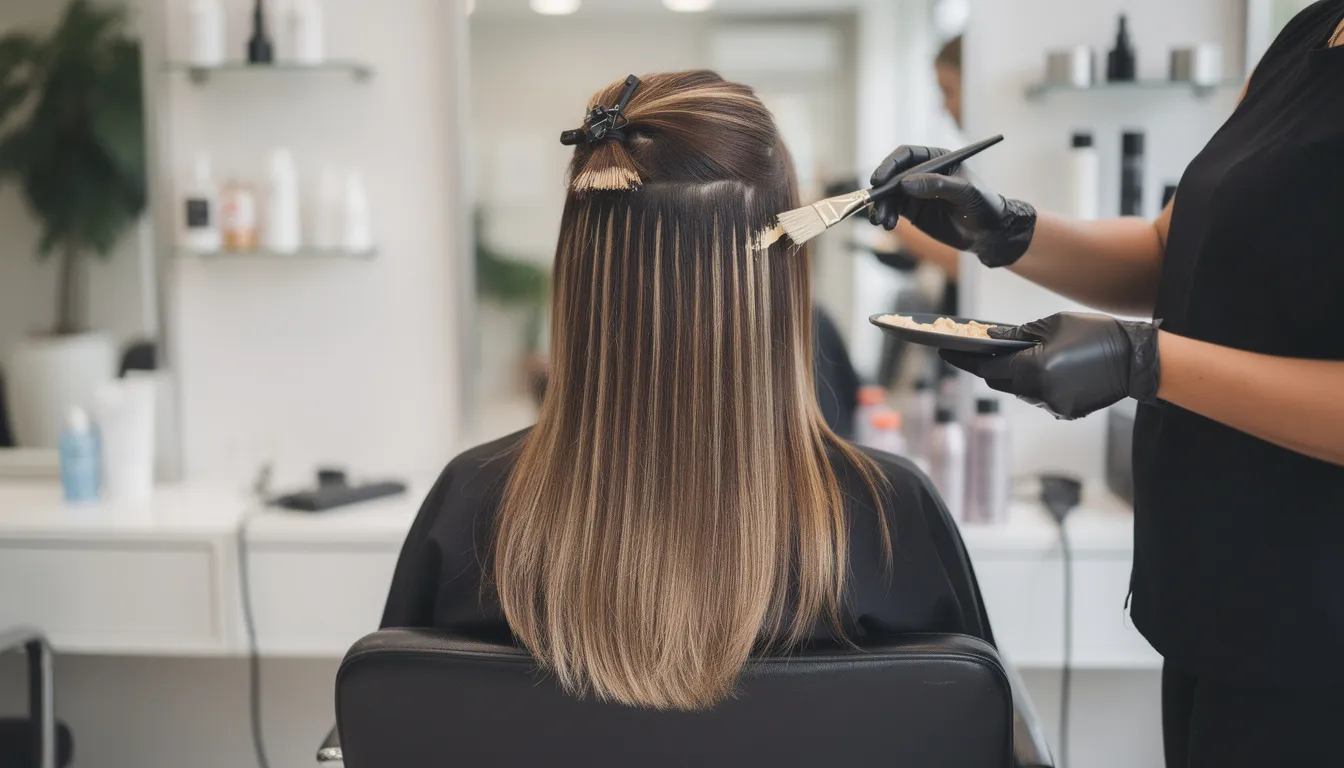
A stylist is hand-painting balayage highlights onto a client's fine hair in a modern salon, showcasing a technique that adds depth and dimension with lighter and darker shades. The scene captures the process of transforming the natural hair color into a beautiful, low-maintenance style that enhances the client's skin tone.
When Babylights or Balayage Might Be Better Than Classic Highlights
Consider babylights or balayage if:
You want soft, low-maintenance blonde without a lot of contrast
You like a darker root with lighter mids and ends
You prefer hair that still looks good even if you go 4–5 months between color services
You have fine hair and want to avoid harsh lines
You travel, ski, or have a busy schedule and need forgiving grow-out
Colorado clients who spend time outdoors often choose balayage for its flexibility. At Clementine’s, we can blend these techniques with lowlights to keep colour looking expensive and dimensional, not stripy.
How a Professional Consultation at Clementine’s Works
A first-time color consultation at Clementine’s in Denver LoHi, Arvada, or Aurora covers everything you need to know before sitting in the chair. Your stylist will ask about your hair history—past colors, treatments, and how your hair has responded. They will assess current condition, looking at texture, porosity, and overall health.
Next comes the fun part: discussing your desired end result. Whether you want subtle dimension or a dramatic change, your stylist will talk through whether highlights, lowlights, or a combination is best. If the goal requires a big shift—say, going from dark brunette to soft dimensional blonde—they will map out a realistic timeline that protects your hair over several visits.
Our team uses professional, salon-grade color and lighteners, along with bond builders and conditioning treatments, to keep hair as healthy as possible. You will also get a customized estimate once your stylist knows how much work and product your hair will require, so there are no surprises.
FAQ: Highlights vs Lowlights at Clementine’s Salon
This section answers common questions Denver-area clients ask before booking their first color appointment. If you still have questions after reading, our front desk team is happy to help.
How do I know if I should start with highlights or lowlights?
The decision depends on your current color, how light or dark you want to go, and how much contrast you are comfortable with. If you want to brighten your overall look, highlights are a good starting point. If you want to add depth or correct washed-out hair, lowlights might be the better choice. Bring 2–3 photos of hair you like and 1–2 of hair you do not like to your first visit. During consultations at Clementine’s, our stylists also consider skin tone and eye color to suggest tones that will flatter your features.
Can I get highlights and lowlights in one appointment?
Yes, many clients receive both in a single session to create rich dimension and a more natural result. Your stylist may use different formulas and placement patterns throughout the head, which can impact timing and cost. Combining both techniques is common for “lived-in” blondes, dimensional brunettes, and subtle copper tones popular in the Denver metro.
Will highlights or lowlights damage my hair?
Any chemical color service must be approached with care. Lowlights are gentler because they deposit colour without lifting, while highlights involve lightening and require more protective steps. At Clementine’s, we use professional lighteners, bond builders, and post-color treatments to help maintain strength and shine. Clients with fragile or over-processed hair may start with lowlights or glosses, then gradually add lighter pieces as hair health improves.
How often will I need to touch up my highlights or lowlights?
Many highlight clients return every 6–10 weeks, while lowlight or more lived-in color clients might come in every 8–12 weeks. Timing depends on how fast your hair grows, how light or dark the contrast is, and how polished you like your color to look. Clementine’s stylists can design a maintenance plan that might alternate between full color appointments and shorter gloss or face-frame refresh visits.
How do I book a highlights or lowlights appointment at Clementine’s?
You can schedule online through Clementine’s Salon website or contact any of our three locations in Denver LoHi, Arvada, or Aurora to speak with the front desk. If you are a first-time color guest, request a consultation to make planning timing and pricing easier. Reserve your spot today and let a Clementine’s stylist design a personalized highlight and lowlight plan just for you.