
9 Mistakes You're Making with Wet Hair (And How to Fix Them Today)
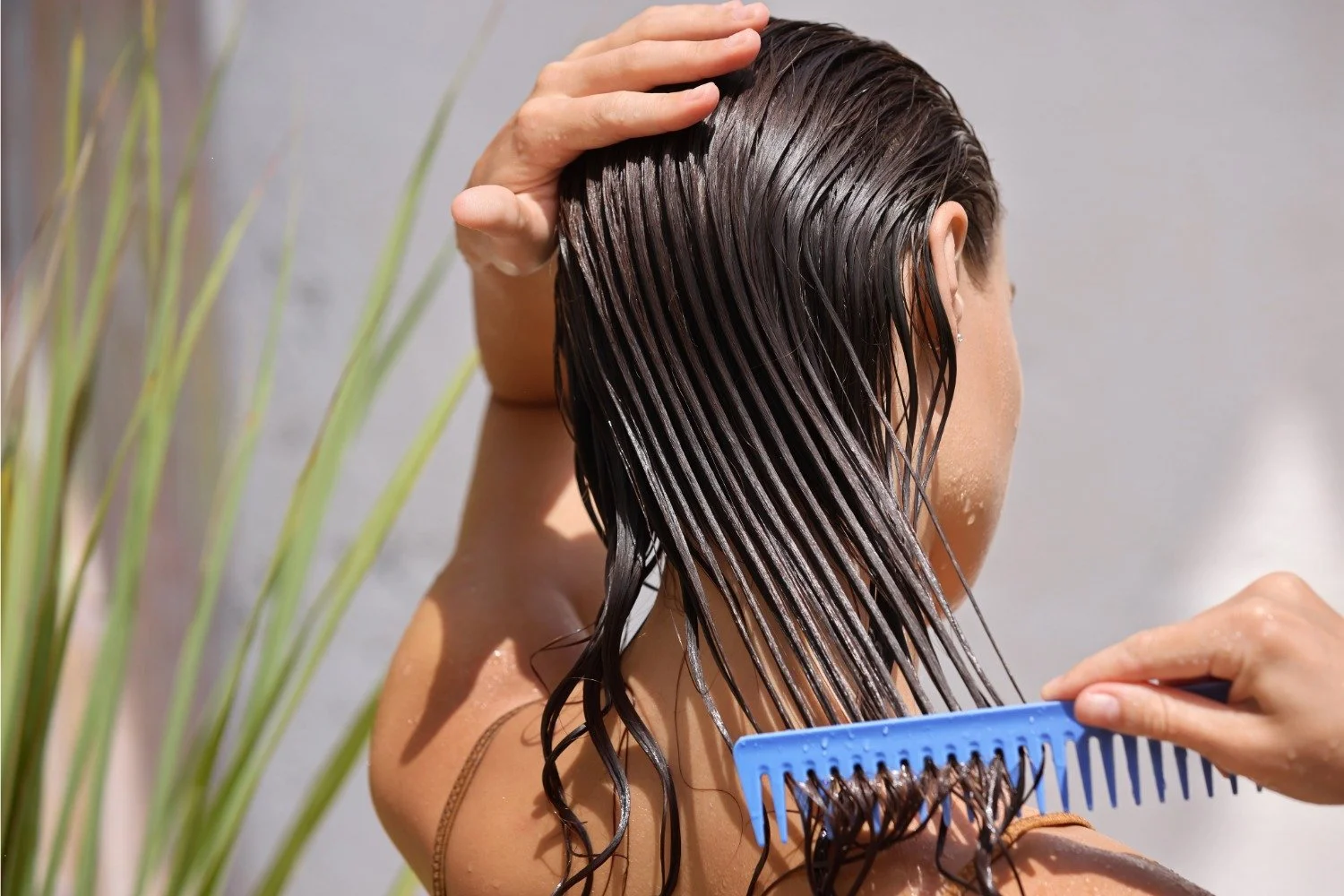
Your hair is at its most fragile when it's soaking wet. Yet somehow, most of us are too careless with it. We rub too hard, twist too tightly, drag a brush through, or pile it into a bun before running out the door.
But wet hair behaves nothing like dry hair. It stretches more, snaps faster, and holds onto whatever shape you give it. The few minutes after your shower, decide whether your strands dry into a smooth finish or into a halo of frizz and breakage.
Fortunately, none of these habits is permanent. Small shifts in your wet hair care routine can completely refresh its texture. Our Denver stylists see the fallout from these slip-ups every week, and the fixes are usually easier than you'd expect.
So, before you reach for your towel again, let's walk through the nine wet hair mistakes worth breaking, plus exactly how to correct each one starting today.
Mistake 1: Rough Towel Drying Like You're Drying Your Body
It’s second nature to grab a towel and scrub your hair the same way you dry off the rest of you. The trouble is, all the back-and-forth rubbing creates friction, and friction leads to tangles, frizz, and weak spots along the cuticle.
Be gentle. Start by squeezing out excess water with your hands instead of wringing it out. Then press and blot using a microfiber towel for hair or a soft cotton tee. For curly or wavy hair, use gentle scrunching motions to maintain shape.
Pro Tip: If your towel feels like it’s tugging your hair, it’s not the right towel. Switch to something smoother for better frizz control.
Mistake 2: Grabbing the Nearest Brush While Your Hair Is Still Dripping
Running a stiff‑bristled brush through dripping hair is almost guaranteed to cause breakage. Wet hair is delicate, and forcing through tangles only weakens it further.
Loosen the knots with your fingers first, so you can feel where the tangles are. Then, switch to a wide‑tooth comb or a flexible detangling brush made for wet hair. Work in sections, moving from ends to roots so you’re never dragging one big tangle upward.
If your hair is fine, go slower and ease off the tension, since thin strands snap without much warning. For thick hair, break it into sections to avoid fighting through a big knot all at once. Whatever you do, always take your time with detangling wet hair.
Mistake 3: Skipping A Slip Product Before You Detangle
Trying to comb through wet hair with nothing to help it glide is like forcing a stuck zipper.
Wet hair needs lubrication to glide smoothly under a comb or brush. Without some “slip,” you’re pulling against resistance.
Apply a lightweight leave-in conditioner for wet hair or a detangling spray right after towel drying. Concentrate it from your mid-lengths to your ends, where the strands are older and more delicate.
Keep this in mind as you go: if your comb catches, add more slip, not more force. It's one of the simplest ways to reduce breakage.
Mistake 4: Twisting Hair into a Tight Towel Turban for Too Long
The towel turban is a classic move. But leave it on too long, and you’re applying consistent wet hair tension to the most fragile areas of your scalp: the crown and hairline.
Over time, this tight winding can weaken roots, disturb curl patterns, and cause tiny break points around the edges.
Try wrapping for no more than ten minutes. Better yet, use a soft towel that molds loosely instead of twisting tightly. Change your part after blotting, rather than twisting tightly, if you’re after volume. You’ll notice right away that your hair dries faster, your curls set in a more natural pattern, and your scalp feels less stressed.
Mistake 5: Pulling Wet Hair into a Tight Bun or Ponytail
Tying back wet hair in a slick bun or ponytail is nearly guaranteed to create tension and breakage at the elastic line.
Wet hair is more elastic. It stretches further but bounces back weaker, so cinching it tightly pulls it beyond what it can comfortably recover from. Most wet hair ponytail damage tends to show up right where you least want it: along the hairline and at the base of the tie.
Instead, go for a loose braid, a soft scrunchie, or a gentle claw clip. These spread out the tension and cut down on breakage from hair ties. When you absolutely need a tight look, wait until your hair is mostly dry before reaching for any snug style. Protective hairstyles like these go a long way.
The moment you feel pulling, take it down. Your hair’s discomfort is your first warning sign.
Mistake 6: Hitting It With Heat Before It’s Ready
We love a good blowout as much as anyone, but firing up the hair dryer on unprotected, damp hair is a fast track to dryness, roughness, and split ends. Heat and bare, wet strands simply don't get along.
Always smooth a heat protectant on damp hair first, then add a smoothing cream if you're prone to frizz, or a mousse if your fine hair could use some lift. Rough-dry your hair until it's mostly dry, then bring in a brush to style.
One of the most underrated blow-dry tips is to keep your nozzle pointed downward; it helps the hair shaft lie flatter and stay shiny.
Remember, heat protectant is not optional if you blow-dry frequently. It helps protect your strands from long-term wear.
Mistake 7: Air Drying the Wrong Way and Calling It Low Maintenance
Air drying feels like the “natural” route, but it’s not automatically the healthiest. When your hair stays soaking wet for hours or gets fussed with while it dries, you invite frizz from air-drying, and for some people, an irritated scalp on top of it.
After washing, make sure to blot enough water out to make sure your hair is damp, not soaked. Apply your styling product, then step away. Touching it as it dries will only disrupt the shape.
If you have curls or waves, set them early by scrunching or twisting gently. A quick three-to-five-minute pass with a diffuser can also help seal your cuticle for a smoother finish before letting it dry the rest of the way.
Mistake 8: Mixing Too Many Products (or Layering Them Wrong)
More is not always better. Overloading wet hair with multiple creams, oils, and sprays can flatten your texture and create dull product buildup that’s tough to wash out. Likewise, stacking products in the wrong order means they cancel each other out instead of cooperating.
Getting your hair product order right is half the battle. As a rule, apply your lightweight styling products first and save the heavier ones for last. A dependable order could be:
Leave-in conditioner
Mousse or curl cream
Gel or serum on the ends
Start with pea-sized amounts and add more only if your hair genuinely needs it. Also, keep oils and heavy serums mostly on the ends, well away from your roots.
Mistake 9: Forgetting the Scalp
Most of us finish a wash thinking only about the ends and mid-lengths, while the scalp gets left out of the conversation completely.
It’s a shame because a scalp under stress has a direct say in how full, fresh, and healthy your hair looks from the very root.
The fix is refreshingly low effort. Blot your scalp gently, just as you would your lengths, and steer clear of sleeping on a soaking wet scalp whenever you can. Good scalp care after washing also means paying attention to warning signs. An itchy scalp after a shower or a bit of flaking is your cue to ask your stylist about a gentle cleanser or a professional scalp treatment.
H2: The Simple Wet Hair Routine That Changes Everything
Feeling like there's a lot to keep track of? Don't worry. Once you string these fixes together, they turn into a quick, repeatable wet hair routine that fits easily into any morning. Here's the whole thing, start to finish.
Squeeze the excess water out gently with your hands
Blot with a microfiber towel or a soft cotton tee
Apply a leave-in conditioner for slip
Detangle from ends to roots with a wide-tooth comb
Add your styling product in small amounts, building up only if needed
Choose to air dry with minimal touching, or blow dry with a heat protectant
Reach for a loose style only when you truly need one
Follow these after-shower hair steps consistently, and you'll notice smoother, stronger, shinier hair with almost no extra time added to your day.
H2: Ready to Give Your Hair a Fresh Start?
Pick one small change from this list and focus on it. Maybe it’s switching from a towel to a cotton shirt or applying your leave-in before detangling. You’ll be amazed at how much softer and easier your hair becomes just from one consistent improvement.
If you’re ready to take it further, book a personalized hair consultation at Clementine’s Salon in Denver. Our stylists can map out a care plan for your hair type, texture, and the city’s famously dry climate.
We’ll help you find the right products, techniques, and cuts to keep your hair stronger and more manageable every day. Book with our Denver salon and let's sort out your hair breakage, one simple habit at a time.